
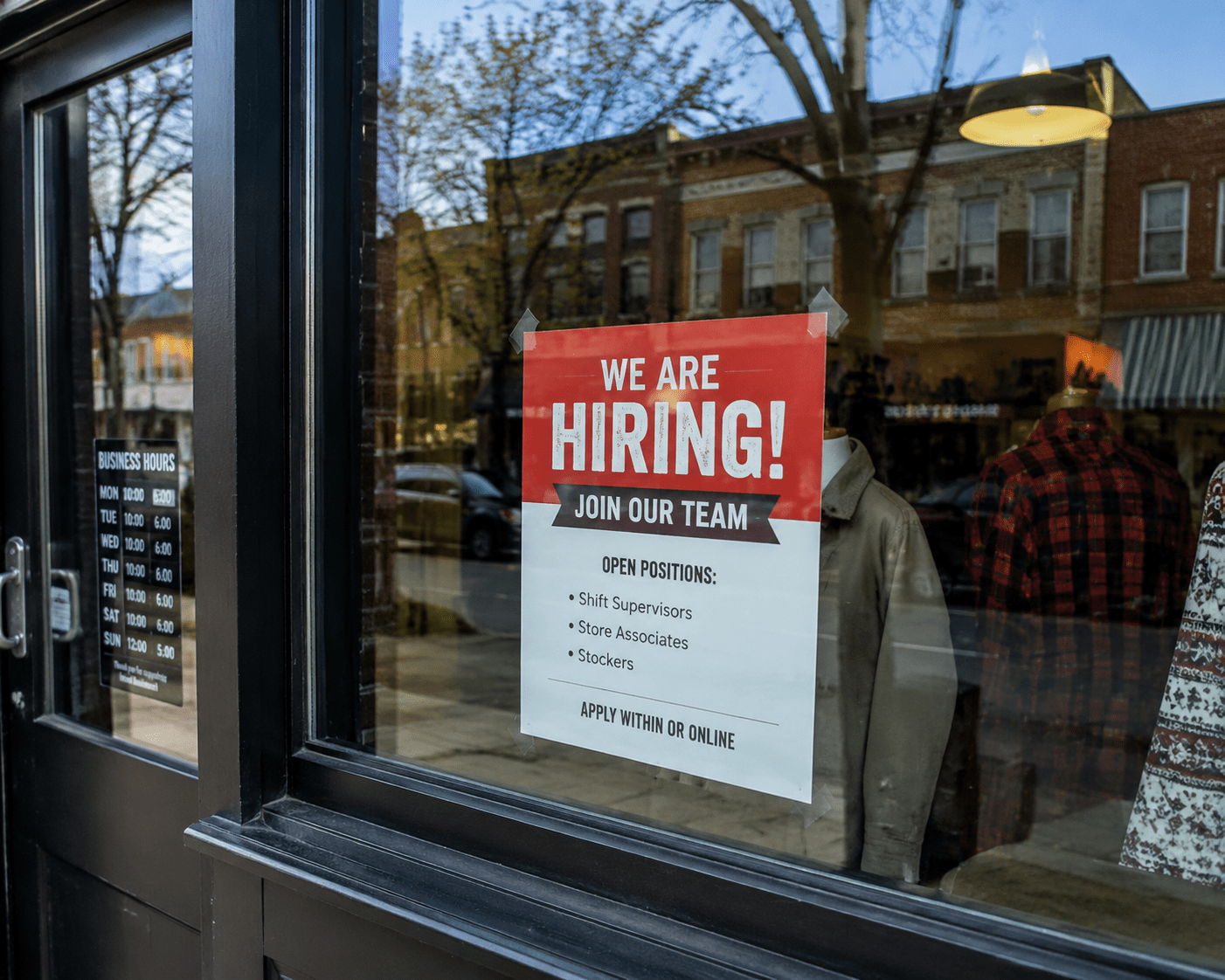
The number of Americans filing new applications for unemployment benefits declined last week, pointing to continued resilience in the US labour market even as hiring slowed sharply in June.
Initial claims for state unemployment benefits fell by 2,000 to a seasonally adjusted 215,000 in the week ended July 4, the Labor Department said on Thursday.
Economists polled by Reuters had expected claims to rise to 218,000.
The latest reading suggests layoffs remain limited despite signs of softer employment growth and broader uncertainty surrounding the US economy.
According to Reuters, jobless claims have eased after climbing at the end of May and the beginning of June, with economists largely attributing the earlier increase to seasonal distortions linked to the end of the academic year rather than any deterioration in labour market conditions.
Some states allow non-teaching school employees to claim unemployment benefits during the summer break, temporarily affecting the government’s seasonal adjustment models.
Economists see a “slow hire, slow fire” market
Although June payroll growth slowed considerably and employment figures for April and May were revised lower, economists said the broader labour market has not experienced a meaningful shift.
Instead, they continue to describe it as a “slow hire, slow fire” environment, where businesses remain cautious about expanding headcount but are also reluctant to implement widespread layoffs.
The report showed that continuing claims, which track the number of people receiving unemployment benefits after their initial claim and are viewed as a proxy for hiring conditions, rose by 8,000 to a seasonally adjusted 1.814 million during the week ended June 27.
Economists noted that the increase was also likely influenced by seasonal adjustment issues related to school holidays rather than weakening labour demand.
Fed monitoring inflation and hiring risks
The data comes after minutes from the Federal Reserve’s June 16-17 policy meeting showed officials generally expected labour market conditions to remain stable in the near term.
Policymakers said they anticipated the unemployment rate would remain close to current levels even as concerns about inflation increased.
The minutes stated that officials “generally expected labor market conditions to remain stable in the near term, with the unemployment rate staying close to current levels.”
However, they also warned that “several participants cited, however, the possibility that uncertainty related to geopolitical developments or the broader economic outlook could lead firms to reduce hiring or begin implementing layoffs.”
The Federal Reserve kept its benchmark interest rate unchanged at 3.50%-3.75% during the June meeting, although updated projections suggested policymakers increasingly expect at least one rate hike later this year.
Hiring remains under pressure
Weekly unemployment claims have largely remained within a range of 200,000 to 250,000 since the US economy emerged from the pandemic-induced recession.
Even so, hiring has been slowing for nearly two years and weakened further in 2025 as businesses grapple with President Donald Trump’s tariffs, reductions in the federal workforce, and the lingering effects of elevated interest rates aimed at controlling inflation.
Several major companies have announced workforce reductions in recent months, including Verizon, UPS, Amazon, Disney, Starbucks, and Walmart.
Earlier this week, Microsoft said it would cut 4,800 jobs, or about 2.1% of its global workforce, including a significant number of positions in its Xbox gaming division.
Despite these layoffs, the latest jobless claims data indicate that broader labour market conditions remain relatively stable, reinforcing expectations that employers are still opting to retain workers even as hiring momentum cools.
The post US jobless claims declined last week as labour market holds steady appeared first on Invezz